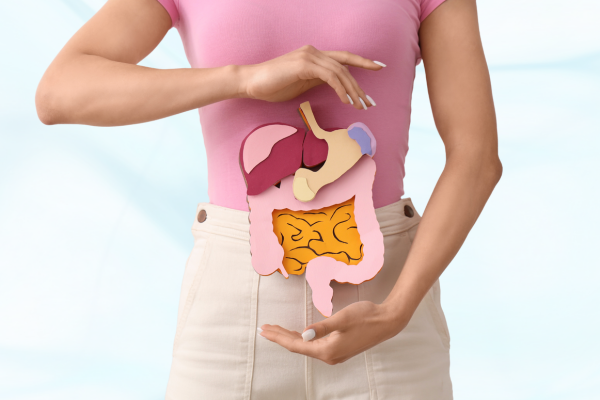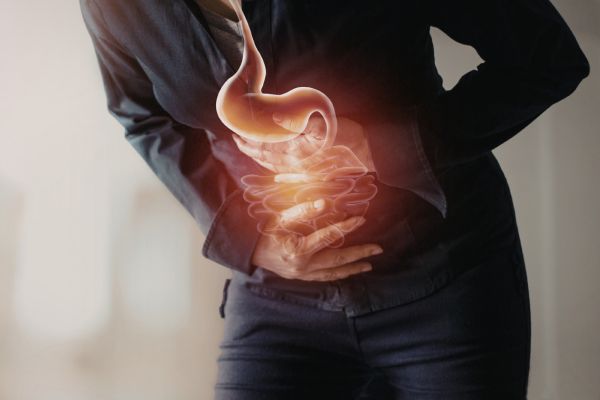
Gut Health & Chronic Inflammation: The Hidden Pain Connection
Gut Health & Chronic Inflammation: The Hidden Pain Connection
When people think about chronic pain, they usually think about joints, muscles, discs, or nerves.
They don’t usually think about the gut.
But emerging research continues to highlight something important: your digestive system plays a meaningful role in whole-body inflammation—and inflammation plays a role in how sensitive, stiff, or uncomfortable your body feels.
Let’s connect the dots.
Your Gut Is More Than Digestion
Your gut isn’t just responsible for breaking down food. It also:
Houses a large portion of your immune system
Helps regulate inflammatory responses
Communicates with your brain and nervous system
Influences nutrient absorption and tissue repair
When the gut environment is balanced, it supports normal immune regulation.
When it’s not? Low-grade, persistent inflammation can increase.
And chronic, systemic inflammation is often associated with ongoing discomfort.
What Is Chronic Inflammation?
Inflammation itself is not bad. It’s a normal, protective response.
The problem arises when inflammation becomes chronic and low-grade, rather than short-term and purposeful.
This type of inflammation may:
Increase joint sensitivity
Amplify pain perception
Slow tissue recovery
Contribute to stiffness and fatigue
It’s not that the gut “causes” pain directly. It’s that an imbalanced gut may contribute to an inflammatory environment that affects the entire body.
The Gut–Inflammation–Pain Loop
Here’s where things get interesting.
When the gut lining becomes irritated or disrupted (sometimes referred to as increased intestinal permeability), immune signaling can become dysregulated. This may:
Trigger inflammatory messengers
Increase nervous system sensitivity
Reduce resilience in joints and connective tissue
Over time, this can create a loop:
Gut imbalance
Increased inflammation
Heightened pain sensitivity
Reduced activity
Further metabolic stress
Breaking that cycle often requires looking beyond the area that hurts.
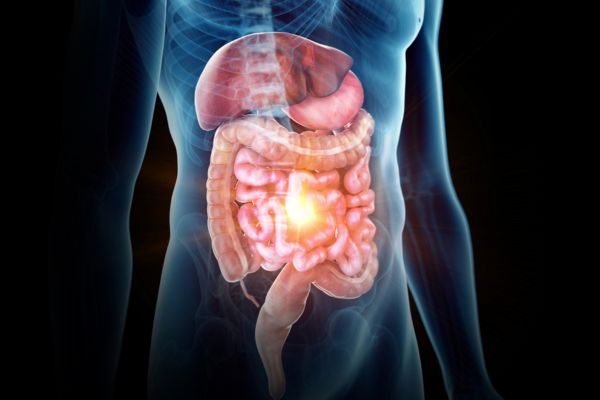
Why Addressing the Gut Can Support Musculoskeletal Health
At our clinic, we often see patients focused entirely on the painful area—knee, back, shoulder, feet.
And that makes sense.
But when someone isn’t progressing the way we’d expect, we sometimes zoom out and ask:
How is digestion?
Are there signs of bloating, irregularity, or food sensitivities?
Is sleep disrupted?
Is energy low?
Supporting gut health may help:
Promote a balanced inflammatory response
Improve nutrient absorption (important for tissue repair)
Support immune regulation
Enhance overall recovery capacity
It’s not a replacement for structural care—but it can be an important complementary piece.
Simple Ways to Support Gut Health
While every individual is different, foundational strategies often include:
Prioritizing fiber-rich whole foods
Including fermented foods when tolerated
Managing stress (the gut and nervous system are closely linked)
Supporting consistent sleep patterns
Staying hydrated
For some individuals, targeted nutritional strategies or structured gut protocols may also be appropriate under professional guidance.
The Bigger Picture
Pain is rarely one-dimensional.
Yes, joints matter.
Yes, biomechanics matter.
Yes, movement matters.
But internal physiology matters too.
If chronic inflammation is part of the picture, supporting gut health may help create a more resilient internal environment—one that allows other therapies and movement strategies to work more effectively.
Curious If This Applies to You?
If you’ve been dealing with ongoing discomfort and feel like you’ve addressed the structural side but still aren’t where you want to be, it may be worth exploring a broader approach.
See how our structured Gut Health Support Kit is designed to evaluate and support digestive function.
Because sometimes the “hidden” piece makes the biggest difference.