Bulging Disc vs Herniated Disc: What’s Actually Causing Your Pain?
Many people who suffer from chronic back pain or sciatica eventually hear one of two diagnoses after imaging tests:
“You have a bulging disc.”
or
“You have a herniated disc.”
At first, these terms can sound alarming and confusing. Many patients wonder what the difference is between the two conditions and which one is responsible for their symptoms.
While both involve damage to the spinal discs, bulging discs and herniated discs are not the same thing. Understanding how these injuries develop — and how they affect nearby nerves — can help explain why some people experience recurring back pain, sciatica, or stiffness.
More importantly, understanding the difference can help patients explore the most appropriate treatment options.
Understanding the Role of Spinal Discs
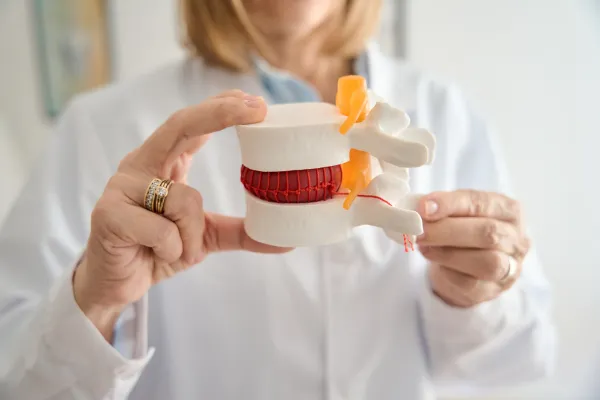
The spine is made up of individual bones called vertebrae stacked on top of each other. Between each vertebra sits a small cushion known as an intervertebral disc.
These discs play an essential role in spinal health. They help:
• Absorb shock during movement
• Allow the spine to bend and twist
• Maintain proper spacing between vertebrae
• Protect nearby spinal nerves
Each disc has two main components:
The outer layer (annulus fibrosus):
A tough ring of fibrous tissue that helps contain the disc.
The inner center (nucleus pulposus):
A soft, gel-like material that helps distribute pressure evenly.
When discs remain healthy and hydrated, they function as flexible shock absorbers for the spine.
However, over time discs can become damaged due to factors such as:
• Aging
• Repetitive stress
• Poor posture
• Prolonged sitting
• Injury or trauma
As discs weaken, they may begin to bulge or herniate.
What Is a Bulging Disc?
A bulging disc occurs when the disc begins to push outward beyond its normal boundary but the outer layer of the disc remains intact.
In simple terms, the disc bulges outward like a slightly flattened tire.
The outer wall of the disc is still holding the gel-like center inside, but the disc is no longer maintaining its original shape.
Bulging discs are often associated with:
• Gradual disc degeneration
• Repetitive spinal stress
• Age-related wear
Many people develop mild disc bulges as they get older, sometimes without noticeable symptoms.
However, if the bulging disc begins to press against nearby nerves, it may cause symptoms such as:
• Lower back pain
• Leg pain
• Tingling in the foot
• Numbness in the leg
• Sciatica
What Is a Herniated Disc?
A herniated disc occurs when the outer wall of the disc tears or weakens enough that the gel-like center pushes outward through the opening.
This can place direct pressure on nearby spinal nerves.
Herniated discs are sometimes referred to as:
• Slipped discs
• Ruptured discs
• Prolapsed discs
Because the inner material of the disc can irritate nerves, herniated discs often produce more intense symptoms than bulging discs.
Common symptoms may include:
• Sharp lower back pain
• Pain traveling down the leg
• Burning or tingling sensations
• Numbness in the foot or toes
• Muscle weakness in the leg
These symptoms are often associated with sciatic nerve irritation.
If you are experiencing recurring nerve pain, you may want to read:
Why Sciatica Keeps Coming Back (Even After Injections or Physical Therapy)
How Bulging Discs and Herniated Discs Develop
Both conditions usually develop gradually over time rather than appearing suddenly.
The process often begins with disc degeneration, which occurs when discs begin to lose hydration and elasticity.
This can happen due to:
• Aging
• Repetitive spinal stress
• Poor posture
• Lack of movement
When discs begin to weaken, the outer layer becomes more vulnerable to pressure.
This may lead to a bulging disc. If the pressure continues or the outer layer weakens further, the disc may eventually herniate.
Early symptoms often appear before a herniation occurs.
You can learn more about these early warning signs in:
The Early Warning Signs of a Disc Problem Most People Ignore
Why Sitting Can Make Disc Injuries Worse
One of the biggest contributors to disc stress is prolonged sitting.
Sitting increases pressure within the spinal discs more than standing or walking.
Over time, prolonged sitting may contribute to:
• Disc dehydration
• Disc bulging
• Disc herniation
• Nerve compression
Modern lifestyles often involve long periods of sitting at desks or in vehicles, which can accelerate disc degeneration.
If sitting aggravates your symptoms, you may want to read:
Why Sitting Is Quietly Destroying Your Spinal Discs
Schedule a Spinal Evaluation
If you have been diagnosed with a bulging disc or herniated disc and continue to experience back pain or sciatica, understanding the severity of the condition is an important step.
Schedule a spinal evaluation to learn more about what may be contributing to your symptoms and what treatment options may be appropriate.
Why MRI Results Can Sometimes Be Confusing
MRI scans are often used to diagnose disc problems.
However, imaging results do not always perfectly match symptoms.
Some people have significant disc bulges on MRI but experience little pain. Others may have only minor disc changes but experience severe symptoms.
This happens because pain is influenced by multiple factors, including:
• Nerve irritation
• Inflammation
• Disc pressure during movement
• Muscle tension
MRI scans show the structure of the spine but cannot always show how the spine behaves during everyday movement.
If you have been told your MRI looks normal but you still experience symptoms, you may want to read:
Why Your MRI Says “Normal” But You Still Have Back Pain
When Disc Problems Cause Sciatica
The sciatic nerve originates from nerve roots in the lower spine.
When a disc bulges or herniates, it can place pressure on these nerve roots.
This may lead to symptoms such as:
• Pain traveling down the leg
• Burning sensations in the calf
• Numbness in the foot
• Tingling in the toes
• Muscle weakness
This pattern of symptoms is known as sciatica.
Sciatic nerve pain can come and go depending on inflammation levels and spinal pressure.
Why Some Treatments Only Provide Temporary Relief
Many treatments for disc-related back pain focus on reducing inflammation around irritated nerves.
Common treatments include:
• Anti-inflammatory medications
• Physical therapy
• Steroid injections
These approaches can help relieve symptoms, especially during flare-ups.
However, if the disc continues to place pressure on nearby nerves, symptoms may eventually return.
You can learn more about this in:
Why Injections Don’t Fix the Root Cause of Disc Pain
How Spinal Decompression Therapy May Help
Because disc pressure plays a major role in many spinal conditions, some conservative treatments focus on reducing pressure within spinal discs.
One such treatment is non-surgical spinal decompression therapy.
Spinal decompression therapy uses a specialized table to gently stretch the spine through controlled traction.
In some cases, this may help:
• Reduce pressure inside spinal discs
• Improve space around spinal nerves
• Encourage fluid movement within discs
• Support spinal healing
You can learn more about how this therapy works in:
How Spinal Decompression Works (A Mechanical Explanation)
What a Spinal Decompression Session Looks Like
Many patients are curious about what decompression therapy involves.
During treatment:
• The patient lies comfortably on a specialized decompression table
• A harness stabilizes the hips or torso
• Gentle traction cycles stretch and relax the spine
Most sessions last approximately 10–20 minutes and are performed under clinical supervision.
Learn more about the process here:
What Happens During a Spinal Decompression Session
When Surgery May Be Necessary
While many disc problems respond to conservative care, surgery may sometimes be recommended.
Situations where surgery may be necessary include:
• Severe nerve compression
• Progressive muscle weakness
• Loss of bowel or bladder control
• Advanced spinal instability
Understanding when surgery may be appropriate can help patients explore treatment options with confidence.
Learn more in:
When Is Back Surgery Actually Necessary?
Understanding the Different Causes of Sciatica
Sciatica can develop from several different spinal conditions.
Common causes include:
• Disc compression
• Spinal stenosis
• Piriformis muscle irritation
• Degenerative disc disease
Because each condition affects the spine differently, treatment approaches may vary.
Learn more in:
The 3 Types of Sciatica (And Why Treatment Must Match the Cause)
Could You Be a Candidate for Spinal Decompression?
Non-surgical spinal decompression may be considered for individuals experiencing:
• Chronic lower back pain
• Sciatica symptoms traveling down the leg
• Disc bulges or herniations on imaging
• Pain that worsens with sitting or bending
• Limited improvement with other conservative treatments
Learn more about candidacy here:
How to Know If You’re a Candidate for Non-Surgical Spinal Decompression
Learn More About Spinal Decompression
If a bulging disc or herniated disc is contributing to your back pain or sciatica, understanding your treatment options may help you move toward relief.
Explore our complete guide to Non-Surgical Spinal Decompression for Chronic Back Pain and Sciatica to learn more about how this therapy works.


