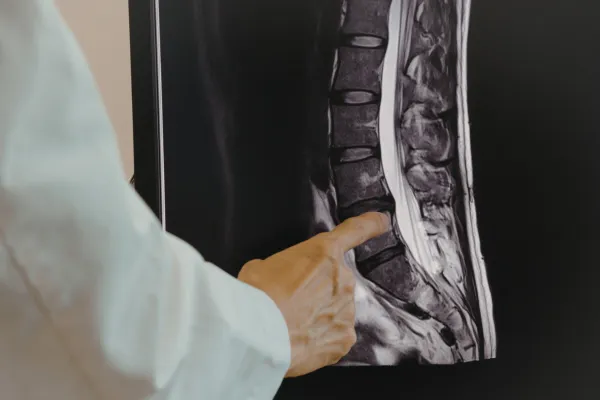
Why Your MRI Says “Normal” But You Still Have Back Pain
One of the most confusing situations for people dealing with chronic back pain is hearing a doctor say something like:
“Your MRI looks normal.”
Yet the pain is very real.
You may still feel stiffness when you wake up, discomfort when sitting, or even pain that travels into the hip or leg. In some cases, symptoms may feel severe even though imaging tests show only minor structural changes.
This disconnect between imaging results and real symptoms can leave many patients frustrated and unsure about what to do next.
Understanding why an MRI may appear normal even when pain persists requires looking deeper into how spinal pain develops, how imaging works, and what MRI scans can — and cannot — reveal about the spine.
What an MRI Actually Shows
An MRI (Magnetic Resonance Imaging) is one of the most commonly used tools to evaluate spinal conditions.
MRI scans provide detailed images of structures within the spine, including:
• Vertebrae (spinal bones)
• Intervertebral discs
• Spinal nerves
• Ligaments
• Soft tissues
These images allow doctors to identify structural changes such as:
• Bulging discs
• Herniated discs
• Disc degeneration
• Spinal stenosis
• Nerve compression
MRI technology is extremely valuable for detecting many types of spinal injuries. However, MRI scans show structure, not always function.
This distinction is important when trying to understand why pain may still occur even when imaging appears normal.
Why Pain Does Not Always Match Imaging Results
Back pain is complex and can be influenced by multiple factors.
An MRI captures a static image of the spine at one moment in time. However, many spinal problems occur during movement or changes in posture.
For example, disc pressure may increase when someone:
• Sits for long periods
• Bends forward
• Lifts objects
• Twists their spine
These dynamic changes may irritate nerves or discs even if the structures appear relatively normal when the MRI was taken.
This means a person may still experience symptoms even when the scan does not show a dramatic structural abnormality.
The Role of Spinal Discs in Back Pain
Between each vertebra of the spine sits a small cushion known as an intervertebral disc.
These discs serve several important functions:
• Absorbing shock during movement
• Allowing the spine to bend and twist
• Maintaining space between vertebrae
• Protecting nearby spinal nerves
Each disc contains a soft gel-like center surrounded by a tougher outer layer.
When discs are healthy and hydrated, they distribute pressure evenly throughout the spine.
However, over time discs can begin to change due to aging, repetitive stress, or prolonged sitting.
These changes may include:
• Disc dehydration
• Disc bulging
• Disc height loss
• Disc herniation
To better understand the difference between disc conditions, you may want to read:
Bulging Disc vs Herniated Disc: What’s Actually Causing Your Pain?
Early Disc Changes May Not Appear Dramatic on MRI
Many disc problems develop gradually over time.
Early disc degeneration may involve subtle changes such as decreased hydration or mild structural weakening.
These early changes may not appear dramatic on imaging, but they can still affect how the disc responds to pressure.
For example, a disc that has begun to lose hydration may become less resilient and more sensitive to stress.
This may cause symptoms such as:
• Lower back stiffness
• Pain when sitting
• Pain during bending movements
If your MRI results appear normal but you continue to experience back pain, stiffness, or sciatica, a detailed evaluation may help identify the underlying cause.
Schedule a spinal evaluation to better understand what may be contributing to your symptoms and explore potential treatment options.
Inflammation Can Cause Pain Even Without Major Structural Damage
Another reason MRI results may appear normal is that pain is often caused by inflammation rather than structural damage.
Inflammation can occur when spinal discs, joints, or ligaments become irritated.
This irritation may produce symptoms such as:
• Localized back pain
• Muscle tightness
• Nerve sensitivity
• Reduced mobility
Inflammation may not always appear clearly on imaging, especially if the underlying structural damage is mild.
However, the symptoms can still be significant.
Nerve Irritation Without Severe Compression
Nerves are extremely sensitive structures.
Even mild pressure or chemical irritation around a nerve root can produce symptoms such as:
• Tingling in the leg
• Burning sensations
• Numbness in the foot
• Sciatic nerve pain
These symptoms can occur even when imaging shows minimal nerve compression.
If you are experiencing recurring nerve pain, you may want to read:
Why Sciatica Keeps Coming Back (Even After Injections or Physical Therapy)
Why Sitting Can Trigger Pain Even When Imaging Looks Normal
Many individuals notice that their symptoms worsen when sitting.
This occurs because sitting significantly increases pressure within spinal discs.
When disc pressure increases, it can aggravate small disc injuries that may not appear obvious on MRI scans.
Over time, prolonged sitting may contribute to disc degeneration and nerve irritation.
If sitting seems to aggravate your back pain, you may find this article helpful:
Why Sitting Is Quietly Destroying Your Spinal Discs
Why Some People Have Abnormal MRIs Without Pain
Interestingly, the opposite situation is also common.
Some individuals have significant disc degeneration or bulging discs visible on MRI scans but experience little or no pain.
This happens because spinal structures can sometimes adapt to structural changes over time.
In these cases, the disc abnormality may exist without causing nerve irritation or inflammation.
This highlights an important principle:
Imaging results must always be interpreted alongside symptoms and physical evaluation.
Why Treatment Often Focuses on Symptoms
When imaging does not show severe structural damage, treatment often focuses on reducing inflammation, improving mobility, and addressing mechanical stress on the spine.
Common conservative treatments may include:
• Physical therapy
• Postural correction
• Activity modification
• Anti-inflammatory treatments
For some individuals, these approaches may significantly improve symptoms.
However, if underlying disc pressure continues to affect the spine, symptoms may recur.
You can learn more about this in:
Why Injections Don’t Fix the Root Cause of Disc Pain
The Role of Mechanical Stress on the Spine
Many cases of back pain are influenced by mechanical stress placed on spinal discs over time.
This stress may come from:
• Prolonged sitting
• Poor posture
• Repetitive lifting
• Lack of spinal mobility
• Weak supporting muscles
Over months or years, these stresses may gradually affect disc health.
Even when MRI findings appear mild, the cumulative effects of mechanical stress may still contribute to symptoms.
How Spinal Decompression Therapy May Help
Because disc pressure plays an important role in many back pain conditions, some treatments aim to reduce pressure within spinal discs.
One such approach is non-surgical spinal decompression therapy.
Spinal decompression therapy uses a specialized table that gently stretches the spine through controlled traction.
In some cases, this may help:
• Reduce pressure inside spinal discs
• Improve spacing around nerves
• Encourage fluid movement within discs
• Support spinal healing
To better understand how this therapy works, read:
How Spinal Decompression Works (A Mechanical Explanation)
Could You Be a Candidate for Spinal Decompression?
Non-surgical spinal decompression may be considered for individuals experiencing:
• Chronic lower back pain
• Sciatica symptoms traveling down the leg
• Disc bulges or herniations on imaging
• Pain that worsens with sitting or bending
• Limited improvement with other conservative treatments
Learn more about candidacy here:
How to Know If You’re a Candidate for Non-Surgical Spinal Decompression
Learn More About Spinal Decompression
If your MRI results appear normal but your symptoms continue, understanding how spinal mechanics affect your pain may help guide treatment decisions.
Explore our complete guide to Non-Surgical Spinal Decompression for Chronic Back Pain and Sciatica to learn more about how this therapy works.


