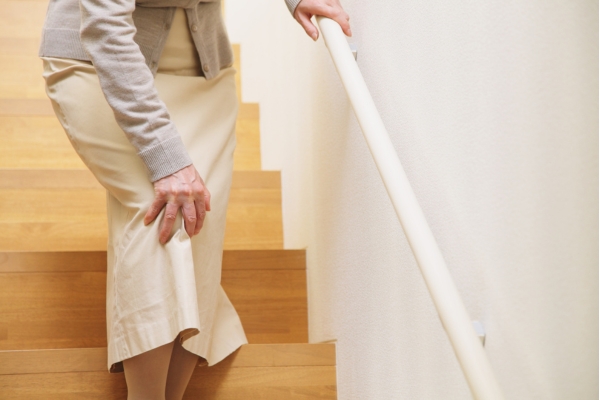
Why Your Knee Hurts More Going Down Stairs
If your knee feels manageable on flat ground—but suddenly painful when going down stairs—you’re not imagining it.
This is one of the most common complaints among adults with knee pain:
“I can walk okay, but stairs kill me.”
“Going up is easier than going down.”
“I have to hold the railing now.”
“I go sideways because it hurts too much.”
And many people assume it means their knee is “bone-on-bone” or completely worn out.
Sometimes arthritis can contribute.
But in many cases, pain going down stairs points to something more specific:
Your knee is struggling to control force.
Descending stairs places unique demands on the knee joint, surrounding muscles, and movement mechanics. When those systems are weak, inflamed, stiff, or poorly coordinated, stairs often become the first place symptoms show up.
At Knee Studio, we help patients understand why stairs hurt—and what can often be improved before assuming surgery is the only next step.
If stairs are becoming painful or intimidating, schedule a Free Knee Relief Discovery Call here.
Why Going Down Stairs Is Harder Than Going Up
Most people are surprised to learn that going downstairs often stresses the knee differently than climbing up.
When descending stairs, your body must:
Lower weight under control
Absorb impact each step
Stabilize balance on one leg
Control knee bend
Manage body momentum
That means the knee is not just moving—it is braking.
And braking requires strength, coordination, and tolerance to load.
If any of those are lacking, pain often appears quickly.
For a full guide to natural knee relief options, read our pillar page:
Knee Pain Relief in The Woodlands: Non-Surgical Options Before Knee Replacement
The 5 Most Common Reasons Knee Pain Shows Up on Stairs
1. Weak Quadriceps
Your quadriceps help control knee bending as you lower yourself down each step.
If they are weak, the knee joint often absorbs more force directly.
This can create:
Front knee pain
Shakiness
Feeling like the leg may collapse
Needing the railing
Related Reading:
2. Kneecap Tracking Issues
The kneecap (patella) should glide smoothly as the knee bends.
If movement mechanics are poor or surrounding muscles are imbalanced, stair descent can irritate the front of the knee.
This often feels like:
Pain around or behind the kneecap
Grinding
Clicking with stairs
Aching after repeated steps
3. Arthritis and Joint Compression
If arthritis is present, bending under load may compress irritated joint surfaces more during stairs than flat walking.
That’s why some people feel okay walking on level ground but flare on stairs.
Related Reading:
4. Limited Ankle or Hip Mobility
If the ankle or hip does not move well, the knee often compensates.
That extra stress may show up first on stairs.
This is why knee pain is not always just a knee problem.
5. Fear and Guarding
After pain starts, many people unconsciously stiffen up while descending.
That creates:
Jerky movement
More load on the knee
Less confidence
Higher stress each step
The brain starts protecting the knee—but sometimes in ways that worsen symptoms.
Why Going Down Feels Worse Than Going Up
Climbing stairs requires pushing.
Descending requires controlling.
Control often exposes weakness faster than pushing does.
That’s why someone may say:
“Upstairs is annoying.”
“Downstairs is impossible.”
This clue is useful because it often points toward strength and control deficits—not just degeneration.
What Your Stair Pain May Be Telling You
Front of Knee Pain
Often linked to kneecap mechanics or quad weakness.
Inside Knee Pain
May relate to arthritis, meniscus irritation, or alignment stress.
Whole Knee Ache
Often tied to overload and poor shock absorption.
Instability on Stairs
Usually suggests support weakness, balance loss, or fear response.
Related Reading:
Why Rest Alone Usually Fails
Many people stop using stairs or reduce activity.
While understandable, long-term avoidance often leads to:
More weakness
More stiffness
Lower tolerance
Greater fear of movement
Then stairs become even harder later.
Related Reading:
Smart Ways to Improve Stair Pain
1. Strengthen the Right Muscles
Especially:
Quads
Glutes
Calves
Core stabilizers
2. Improve Step Mechanics
Foot placement, posture, tempo, and control matter.
3. Reduce Inflammation
Swollen knees often hate stairs.
4. Build Confidence Gradually
Progressive exposure helps retrain tolerance.
5. Address Mobility Restrictions
Ankles and hips can reduce stress on the knee when functioning better.
What NOT to Do
Push Through Sharp Pain
This often increases irritation.
Avoid All Stair Use Forever
This can accelerate decline.
Assume You Need Surgery Immediately
Many stair-related issues improve when underlying deficits are addressed.
Related Reading:
Signs It’s Time for a Proper Evaluation
If you:
Need the railing every time
Go sideways on stairs
Avoid second floors
Feel unstable descending
Have worsening pain month to month
Can walk flat ground but stairs are awful
…you likely need more than generic advice.
You need to know why stairs hurt in your specific case.
If stairs are limiting your confidence or independence, book your Free Knee Relief Discovery Call here.
What We Look At at Knee Studio
Stair pain is often a clue, not the full diagnosis.
We look at:
Strength
Stability
Movement mechanics
Arthritis contribution
Balance
Mobility restrictions
Confidence with load
That helps determine whether conservative care still makes sense.
Related Reading:
Final Thoughts
If your knee hurts more going down stairs, it usually means the knee is struggling to control force—not simply that it is “used up.”
That’s good news.
Because strength, mechanics, inflammation, and confidence can often improve.
Before assuming stairs pain means surgery is next, find out what may still be fixable first.
Final CTA
Take the first step toward easier stairs and stronger movement. Schedule your Free Knee Relief Discovery Call today.


