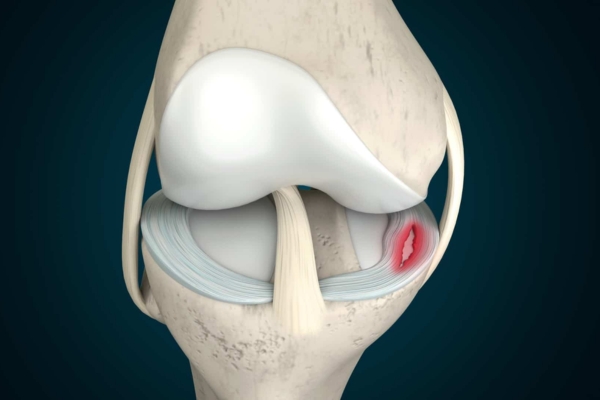
Meniscus Tears Over 50: What You Should Know First
If you’re over 50 and suddenly started dealing with knee pain, catching, swelling, or discomfort during twisting movements, you may have been told you have a meniscus tear.
For many people, hearing the word “tear” creates instant concern:
“Did I destroy something?”
“Do I need surgery now?”
“Will it keep getting worse?”
“Should I stop walking and exercising?”
The truth is more nuanced.
Many meniscus tears after age 50 are degenerative, not traumatic. That means they often develop gradually over time rather than from one dramatic injury.
And in many cases, they can be managed without immediate surgery.
At Knee Studio, we help adults understand what a meniscus tear really means, what symptoms matter most, and when conservative care may still be a smart first step.
Recently told you have a meniscus tear and unsure what to do next? Schedule a Free Knee Relief Discovery Call here.
What Is the Meniscus?
Each knee has two menisci—rubbery cartilage pads that help cushion and stabilize the joint.
They help with:
Shock absorption
Load distribution
Joint stability
Smooth movement
Think of them as protective spacers that help the knee handle force.
Over time, these tissues can wear, fray, or tear.
Why Meniscus Tears Are Common After 50
In younger athletes, meniscus tears often happen from sudden twisting injuries.
But after 50, many tears occur differently.
They may develop from:
Years of joint loading
Arthritis changes
Stiffness
Muscle weakness
Poor movement mechanics
Minor twists on already worn tissue
That means someone may kneel, pivot, or step awkwardly and suddenly feel pain—even though the process was building for years.
For a complete guide to non-surgical options, read our pillar page:
Knee Pain Relief in The Woodlands: Non-Surgical Options Before Knee Replacement
Common Symptoms of a Meniscus Tear
Not every meniscus tear feels the same.
Common symptoms include:
Pain along the inside or outside of the knee
Swelling
Clicking or catching
Pain with twisting
Difficulty squatting
Stiffness after sitting
Trouble fully bending or straightening the knee
Some people have tears with very few symptoms.
Others have significant irritation.
That’s why imaging alone does not tell the whole story.
Important Truth: Many People Have Tears Without Pain
Studies have shown many adults over 50 have meniscus changes on MRI—even without knee pain.
That means seeing a tear on imaging does not automatically mean it is the main reason you hurt.
Pain may also be influenced by:
Arthritis
Inflammation
Weakness
Joint overload
Instability
Reduced mobility
Related Reading:
Do All Meniscus Tears Need Surgery?
No.
Many do not.
Especially degenerative tears in adults over 50.
In many cases, symptoms improve with a structured conservative plan focused on function rather than rushing straight to surgery.
That may include:
Strengthening
Swelling reduction
Mobility work
Movement retraining
Weight management
Load modification
For many adults, surgery is not the first or only option.
When Surgery May Be More Appropriate
There are situations where surgical consultation may make sense, including:
True Mechanical Locking
The knee cannot fully move due to a displaced tear.
Significant Repeated Giving Way
Especially after failed conservative care.
Persistent Severe Symptoms
Despite quality rehab and time.
Acute Major Injury
Especially with instability or multiple damaged structures.
Even then, the decision should be individualized.
Related Reading:
Why Strength Matters More Than Most Realize
Many adults with meniscus pain also have weakness in:
Quads
Glutes
Hamstrings
Calves
When support muscles weaken, the knee often absorbs more stress.
That can aggravate an already irritated meniscus area.
Related Reading:
Why Rest Alone Often Fails
After hearing “tear,” many people stop moving completely.
That is understandable—but prolonged avoidance can create:
More stiffness
More weakness
Lower walking tolerance
Slower recovery
The goal is not reckless movement or total shutdown.
It’s strategic movement.
Related Reading:
How Inflammation Can Mimic Worse Damage
Sometimes the meniscus is irritated, but inflammation is the main symptom amplifier.
That means swelling and sensitivity may be creating more pain than the tear itself.
Reducing inflammation and improving movement can dramatically change how the knee feels.
Related Reading:
What a Smart Non-Surgical Plan Often Includes
1. Calm the Flare-Up
Reduce swelling and irritation first.
2. Restore Motion
Gentle bending and straightening progressions.
3. Rebuild Strength
Especially support muscles around the knee and hip.
4. Improve Mechanics
Walking, stairs, and squat patterns matter.
5. Gradual Return to Activity
Avoid the boom-bust cycle.
Signs You Should Get Evaluated Soon
If you have:
Repeated swelling
Catching or locking
Pain getting worse monthly
Trouble with stairs
Walking limitations
Knee instability
Fear of movement
…it’s time for clarity on what is really driving the symptoms.
If your knee tear diagnosis left you with more questions than answers, book your Free Knee Relief Discovery Call here.
What We Believe at Knee Studio
A meniscus tear diagnosis should not automatically send someone into panic mode.
Many adults over 50 improve when the full knee system is addressed:
Strength
Stability
Inflammation
Movement mechanics
Confidence
Load management
The MRI is information—not destiny.
Related Reading:
Final Thoughts
Meniscus tears over 50 are common—and many are degenerative rather than catastrophic.
That means surgery is not always urgent or necessary.
Before assuming the worst, it’s worth understanding how much of your pain may be coming from inflammation, weakness, and mechanics that can still improve.
The smartest next step is clarity.
Take the first step toward understanding your options. Schedule your Free Knee Relief Discovery Call today.


