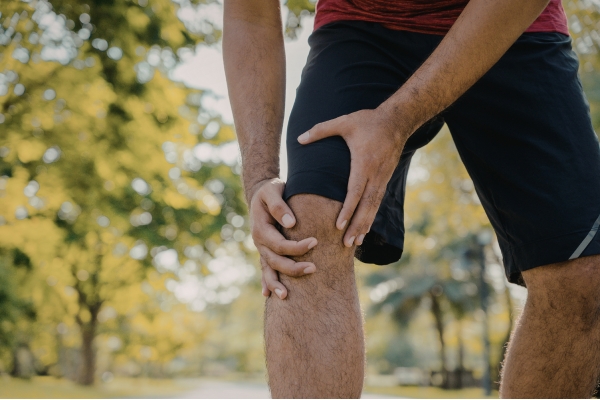
The Hidden Muscle Weakness Behind Knee Instability
If your knee feels like it might give out, wobble, buckle, or fail to support you, it’s easy to assume the joint itself is the only problem.
Many people immediately think:
“My knee is bone-on-bone.”
“The cartilage must be gone.”
“I need surgery.”
“My knee is just worn out.”
Sometimes structural changes do matter.
But in many adults, a major contributor to knee instability is something less obvious:
Hidden muscle weakness.
Your knee depends heavily on surrounding muscles to absorb force, guide movement, and keep the joint stable. When those support systems weaken, the knee often feels unreliable—even if the X-ray doesn’t fully explain the symptoms.
That means instability is not always just a “joint damage” problem. It is often a support-system problem too.
For many adults in The Woodlands dealing with stairs, walking fear, wobbling, or confidence loss, rebuilding support can be one of the most important steps before assuming surgery is the only answer.
If your knee feels weak, unstable, or like it may give out, schedule a Free Knee Relief Discovery Call here.
Why Your Knee Needs More Than Cartilage
Most people think of the knee as a hinge joint.
But in reality, it is part of a larger movement system involving:
Quadriceps
Hamstrings
Glutes
Hips
Calves
Core
Ankles
These muscles help:
Control alignment
Reduce stress on the joint
Absorb force during walking
Support balance
Stabilize stairs and direction changes
When they weaken, the knee often takes on loads it was never meant to handle alone.
For a full guide to natural knee relief options, read our pillar page:
Knee Pain Relief in The Woodlands: Non-Surgical Options Before Knee Replacement
Common Signs Muscle Weakness Is Affecting Your Knee
Many people assume weakness would be obvious.
It often isn’t.
Instead, it shows up as:
Knee buckling unexpectedly
Feeling shaky on stairs
Trouble standing from chairs
One leg feeling weaker than the other
Fear walking on uneven ground
Limping after longer walks
Difficulty getting off the floor
Needing railings on stairs
Balance loss
These symptoms are often blamed only on arthritis—but weakness may be a huge piece of the puzzle.
The 4 Most Common Weak Areas Behind Knee Instability
1. Quadriceps Weakness
Your quads help straighten the knee and control movement while walking, sitting, and climbing stairs.
Weak quads can create:
Difficulty standing up
Pain descending stairs
Shaky knees
Poor shock absorption
Related Reading:
2. Glute Weakness
Your glutes stabilize the pelvis and control leg alignment.
Weak glutes can cause the knee to collapse inward or track poorly during movement.
This increases joint stress over time.
3. Hamstring Weakness
Hamstrings help control deceleration and protect the knee during walking and bending.
When undertrained, stability often drops.
4. Calf and Ankle Weakness
Your lower leg affects balance and push-off strength.
Weak calves often reduce walking efficiency and confidence.
Why Weakness Often Starts Quietly
Many adults don’t notice the decline because it happens gradually.
It may begin after:
A knee flare-up
Reduced exercise
Weight gain
Sitting more often
Old injuries
Pain avoidance
Arthritis progression
Then the cycle begins:
Pain causes less movement.
Less movement causes weakness.
Weakness increases instability.
Instability increases pain.
Related Reading:
Why X-Rays Don’t Tell the Whole Story
Some people have moderate arthritis but severe instability.
Others have advanced arthritis but surprisingly decent function.
Why?
Because knee symptoms are influenced by more than cartilage wear.
They are also affected by:
Strength
Balance
Coordination
Confidence
Circulation
Movement patterns
That’s why two people with similar imaging can feel completely different.
Related Reading:
Can Strength Really Improve a Painful Knee?
Often, yes.
Improving support around the knee may help reduce excess stress inside the joint.
That can lead to:
Better walking tolerance
Less wobbling
More confidence
Easier stairs
Improved balance
Reduced flare-ups
Better daily mobility
It’s not about becoming a bodybuilder.
It’s about restoring support.
Smart Ways to Rebuild Knee Stability
1. Controlled Strength Training
Targeting the right muscles with proper form matters more than random exercise.
2. Balance Work
Small drills can retrain joint awareness and confidence.
3. Hip and Glute Activation
Often overlooked, but extremely important.
4. Gait Correction
Walking mechanics can either help or hurt your knee.
5. Progressive Loading
Too much too soon can flare symptoms. Progression matters.
What NOT to Do
Many people try one of two extremes:
Total Rest
This often worsens weakness.
Aggressive Exercise Through Pain
This can aggravate irritated tissues.
The better path is strategic progression.
Related Reading:
Signs You Should Get Evaluated Soon
If your knee is:
Buckling
Shaky on stairs
Limiting walking
Causing falls or near falls
Making you rely on railings
Reducing confidence in public
…it’s time to understand whether weakness is contributing.
If your knee feels unstable or unreliable, book your Free Knee Relief Discovery Call here.
Does Instability Mean Surgery?
Not always.
Some cases do require orthopedic evaluation.
But many adults still have room to improve support, movement, and confidence first.
The key is understanding:
Is the instability structural?
Is it strength-related?
Is it both?
What can still improve conservatively?
Related Reading:
What We Believe at Knee Studio
A knee should not be judged only by an X-ray.
It should be judged by:
How it moves
How it tolerates load
How stable it feels
How confident you are using it
That’s why many people need more than pain management—they need a support rebuild.
Final Thoughts
If your knee feels unstable, weak, or like it might give out, hidden muscle weakness may be a major factor.
That doesn’t mean the joint has no wear.
It means the story may be bigger than cartilage alone.
And when support improves, many people move better than they expected.
Final CTA
Take the first step toward a stronger, more stable knee. Schedule your Free Knee Relief Discovery Call today.


