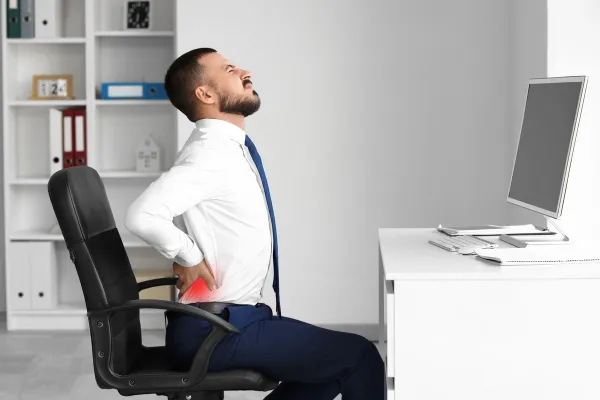
Why Sitting Is Quietly Destroying Your Spinal Discs
Most people don’t think much about sitting. It’s something we do every day — at work, while driving, during meals, or when relaxing at home.
But what many people don’t realize is that prolonged sitting may be one of the biggest contributors to chronic back pain, disc injuries, and sciatica.
Modern lifestyles have dramatically increased the amount of time people spend sitting each day. Many adults sit for 8–12 hours daily, often without realizing how much pressure this places on the spine.
Over time, that pressure can gradually affect spinal discs, potentially contributing to disc bulges, herniations, and nerve irritation.
Understanding how sitting affects your spine is an important step toward protecting long-term spinal health.
How the Spine Is Designed to Work
The human spine is made up of 24 movable vertebrae, stacked on top of each other. Between these bones sit small cushions known as intervertebral discs.
These discs perform several critical functions:
• Absorb shock during movement
• Allow the spine to bend and twist
• Maintain spacing between vertebrae
• Protect nearby spinal nerves
Each disc contains a soft gel-like center surrounded by a tougher outer layer. This structure allows the disc to distribute pressure evenly when the spine moves.
When discs remain healthy and hydrated, they help the spine function smoothly and comfortably.
However, certain lifestyle factors — including prolonged sitting — can gradually disrupt this balance.
The Surprising Pressure Sitting Places on the Spine
Many people assume standing places the most stress on the spine. In reality, sitting often creates more pressure on spinal discs than standing or walking.
Research has shown that sitting can increase disc pressure significantly, especially when posture is poor.
When you sit:
• The pelvis often tilts backward
• The natural curve of the lower spine flattens
• Disc pressure increases
• The core muscles relax
This combination can place increased strain on the lower spinal discs.
Over time, repeated stress can contribute to disc degeneration and nerve irritation.
Why Sitting for Long Periods Is a Problem
Sitting occasionally is not harmful. The problem occurs when sitting becomes prolonged and repetitive.
Long periods of sitting may contribute to:
• Reduced disc hydration
• Increased disc compression
• Weakening of core support muscles
• Reduced circulation to spinal tissues
Discs rely on movement to receive nutrients and maintain hydration. When the spine stays in one position for extended periods, discs may not receive the same level of fluid exchange they need to stay healthy.
Over time, this may contribute to:
• Disc dehydration
• Disc bulging
• Loss of disc height
These structural changes can increase the likelihood of chronic back pain and nerve compression.
How Sitting Contributes to Sciatica
Sciatica occurs when the sciatic nerve becomes irritated or compressed.
This nerve originates in the lower spine and travels through the hips and down the legs.
When spinal discs bulge or herniate, they may place pressure on the nerve roots that form the sciatic nerve.
This can produce symptoms such as:
• Pain traveling down the leg
• Burning or tingling sensations
• Numbness in the foot
• Weakness in the leg
Because sitting increases disc pressure, it can worsen nerve compression in individuals with disc injuries.
If you are experiencing recurring sciatic nerve pain, you may want to read:
Why Sciatica Keeps Coming Back (Even After Injections or Physical Therapy)
If sitting for long periods aggravates your back pain or sciatic symptoms, identifying the underlying cause may be an important step toward relief.
Schedule a spinal evaluation to learn more about what may be contributing to your symptoms and whether conservative treatments may help.
The Relationship Between Sitting and Disc Degeneration
Disc degeneration is a gradual process that occurs over time.
Several factors can contribute to disc wear, including:
• Aging
• Repetitive spinal stress
• Poor posture
• Lack of movement
• Prolonged sitting
When discs experience constant pressure without adequate movement, they may begin to lose hydration.
Hydration is important because it helps discs maintain their shape and cushioning ability.
As discs lose hydration, they may become more vulnerable to:
• Bulging
• Herniation
• Structural weakening
These changes can increase the likelihood of chronic back pain.
Why Desk Jobs Increase the Risk of Back Pain
Many modern jobs require people to spend long hours seated in front of computers.
Common workplace habits that increase spinal stress include:
• Leaning forward toward a screen
• Slouching in a chair
• Sitting without lumbar support
• Remaining in the same position for hours
This posture can shift spinal alignment and place additional pressure on the lower back.
Over months and years, this repetitive stress may contribute to disc injuries.
When Back Pain Persists Despite Treatment
Many individuals with back pain seek treatment through physical therapy, medications, or injections.
These approaches can be helpful for reducing inflammation and improving mobility.
However, if the underlying mechanical pressure affecting the disc remains unchanged, symptoms may continue to return.
For example:
• Injections may reduce inflammation around nerves
• Therapy may strengthen supporting muscles
But neither approach necessarily changes internal disc pressure.
You can learn more about this concept in:
Why Injections Don’t Fix the Root Cause of Disc Pain
Why MRI Results Don’t Always Match Symptoms
Some people experience significant back pain even when imaging tests show only mild disc changes.
Others may have visible disc degeneration on MRI but experience minimal discomfort.
This occurs because imaging cannot always capture:
• Dynamic changes in disc pressure
• Temporary nerve irritation
• Movement-related compression
If you have been told your MRI looks “normal” but you still experience symptoms, you may want to read:
Why Your MRI Says “Normal” But You Still Have Pain
How Spinal Decompression Therapy May Help
Because disc pressure plays such an important role in many back pain conditions, some conservative therapies aim to address this mechanical factor.
One such approach is non-surgical spinal decompression therapy.
Spinal decompression uses controlled traction to gently stretch the spine. This may help reduce pressure within the discs and create more space around spinal nerves.
In some cases, decompression therapy may support:
• Reduced disc pressure
• Improved disc hydration
• Decreased nerve irritation
• Improved spinal mobility
To better understand the mechanics of this therapy, read:
How Spinal Decompression Works (A Mechanical Explanation)
What a Spinal Decompression Session Looks Like
Many patients are curious about what decompression therapy feels like.
During a session:
• The patient lies comfortably on a specialized table
• A harness stabilizes the hips or torso
• The table gently stretches the spine through controlled traction cycles
Sessions typically last about 10–20 minutes and take place under clinical supervision.
Learn more about the treatment process in:
What Happens During a Spinal Decompression Session
When Surgery May Be Considered
Although many cases of back pain and sciatica respond to conservative care, surgery may sometimes be recommended.
Situations where surgery may be necessary include:
• Progressive nerve damage
• Severe spinal instability
• Loss of bowel or bladder control
• Advanced disc herniation
Understanding when surgery is appropriate can help patients explore treatment options more confidently.
You can learn more in:
When Is Back Surgery Actually Necessary?
Understanding the Different Types of Sciatica
Sciatica can originate from several different conditions.
Common causes include:
• Disc compression
• Spinal stenosis
• Piriformis muscle irritation
• Degenerative disc disease
Because the source of nerve irritation can vary, treatment approaches must be tailored to the specific cause.
Learn more in:
The 3 Types of Sciatica (And Why Treatment Must Match the Cause)
Could You Be a Candidate for Spinal Decompression?
Not all cases of back pain are caused by disc pressure.
However, spinal decompression therapy may be considered for individuals experiencing:
• Chronic lower back pain lasting several months
• Sciatica symptoms traveling down the leg
• Disc bulges or herniations on imaging
• Pain that worsens with sitting or bending
• Limited improvement with other conservative treatments
To learn more about candidacy for this therapy, read:
How to Know If You’re a Candidate for Non-Surgical Spinal Decompression
If sitting for long periods has contributed to recurring back pain or sciatic nerve symptoms, understanding the mechanics of your spine may help guide treatment decisions.
Explore our complete guide to Non-Surgical Spinal Decompression for Chronic Back Pain and Sciatica to learn more about how this therapy works.


