Can Knee Cartilage Regenerate Naturally?
If you’ve been diagnosed with knee arthritis, there’s a good chance you’ve heard something discouraging:
“Cartilage doesn’t grow back.”
“It’s just wear and tear.”
“Nothing can be done except injections or surgery.”
“You’ll have to live with it.”
So naturally, many people ask:
Can knee cartilage regenerate naturally?
The honest answer is nuanced.
Can severely damaged cartilage instantly grow back to a brand-new 20-year-old knee? No.
Can the body improve the environment around the knee, support tissue health, reduce pain, improve function, and in some cases encourage repair responses? Often, yes.
That distinction matters.
Because many adults assume that if cartilage cannot be perfectly restored, improvement is impossible.
That simply isn’t true.
At Knee Studio, we help people understand what realistic recovery can look like—without hype, false promises, or fear-based messaging.
Wondering if your knee may still improve naturally before surgery? Schedule a Free Knee Relief Discovery Call here.
What Cartilage Actually Does
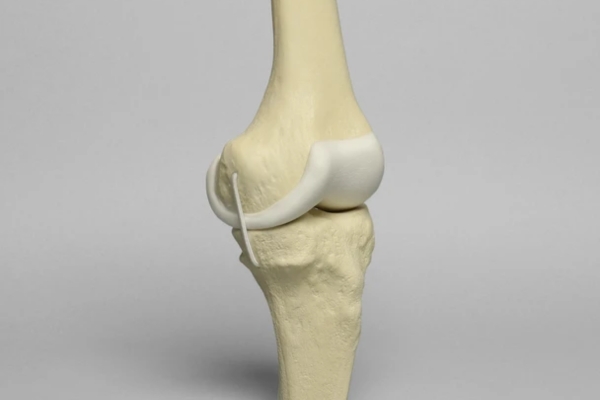
Cartilage is the smooth, protective tissue that helps bones glide with less friction inside the joint.
Healthy cartilage helps with:
Shock absorption
Smooth movement
Load distribution
Reduced irritation during motion
Over time, cartilage may wear down due to:
Aging
Repetitive overload
Past injuries
Poor mechanics
Instability
Inflammation
Excess body weight
When cartilage becomes damaged, stiffness and pain often increase.
For a full guide to non-surgical options before replacement, read our pillar page:
Knee Pain Relief in The Woodlands: Non-Surgical Options Before Knee Replacement
Why People Think Cartilage Cannot Heal at All
Cartilage has a limited blood supply compared with muscle or skin.
That means it often heals slower and less predictably than tissues with richer circulation.
Because of this, many people hear oversimplified statements like:
“Cartilage never heals.”
“Once it’s gone, it’s gone.”
“Your only option is surgery.”
But those statements ignore a bigger truth:
Even when cartilage is damaged, many factors influencing pain and function can still improve.
Related Reading:
What “Regeneration” Really Means
Many people think regeneration means:
“The knee becomes brand new again.”
That’s usually unrealistic.
A smarter definition is:
Improving the joint environment so the body can function better, calm irritation, support healthier tissue behavior, and reduce symptom drivers.
That may include:
Better movement quality
Less inflammation
Stronger support muscles
Improved circulation
Reduced overload
Better daily tolerance
For many patients, those changes matter more than chasing a perfect MRI.
Can the Body Repair Cartilage at All?
In some situations, the body may create limited repair responses.
Depending on severity and location, this can include:
Small healing adaptations
Fibrocartilage-type repair tissue
Improved cushioning function
Better tolerance of damaged areas
But expectations must stay realistic.
This is not instant regrowth.
This is about supporting function and joint health over time.
Why Some People Feel Better Without “New Cartilage”
This is one of the most important concepts to understand.
Many people improve significantly even though their X-ray may still show arthritis.
Why?
Because pain is influenced by more than cartilage alone.
It can also be affected by:
Inflammation
Swelling
Weakness
Instability
Tightness
Poor movement mechanics
Nervous system sensitivity
Loss of confidence
When those improve, symptoms often improve.
Related Reading:
5 Ways to Support Natural Knee Recovery
1. Build Strength Around the Joint
The stronger your support system, the less stress the knee may absorb.
Focus often includes:
Quadriceps
Glutes
Hamstrings
Calves
Related Reading:
2. Improve Movement Mechanics
How you walk, squat, climb stairs, and shift weight matters.
Poor mechanics can repeatedly irritate already sensitive tissue.
Related Reading:
3. Reduce Chronic Inflammation
Persistent inflammation can make the knee feel far worse than imaging alone would suggest.
Lifestyle, recovery, movement, and nutrition all matter.
Related Reading:
4. Improve Circulation
Tissues recover better when blood flow improves.
Walking, movement, strengthening, and certain therapies may support this.
Related Reading:
5. Manage Load Wisely
Too much force too soon can aggravate symptoms.
Too little movement can worsen weakness and stiffness.
Smart progression is key.
What Does NOT Help Long-Term
Many people rely only on:
Rest
Pain pills
Repeated injections
Avoiding movement
Waiting until it gets unbearable
This often leads to more decline over time.
Related Reading:
When Cartilage Loss May Be More Advanced
There are cases where damage is significant and surgery may eventually be appropriate.
Especially when someone has:
Severe daily limitation
Constant pain
Major sleep disruption
Loss of independence
Failed quality conservative care
But even then, improving strength and function first often helps.
Related Reading:
Signs You May Still Have Room to Improve Naturally
You may still be a strong candidate for non-surgical care if:
You can still walk, even with pain
Symptoms flare with activity but calm with rest
You feel weak or unstable
Stairs are harder than flat walking
You’ve never followed a structured plan
You want honest options before surgery
If you want to know whether your knee may still respond to a natural approach, book your Free Knee Relief Discovery Call here.
What We Believe at Knee Studio
The goal is not to promise magic cartilage regrowth.
The goal is to help people:
Move better
Hurt less
Stay active longer
Improve confidence
Delay unnecessary surgery when appropriate
That’s real progress.
Final Thoughts
Can knee cartilage regenerate naturally?
Sometimes limited repair is possible—but that is only part of the story.
More importantly, many knees can improve through better strength, circulation, movement, and inflammation control even when arthritis exists.
So if you’ve been told “nothing can be done,” don’t assume that is the full truth.
The smartest next step is finding out what can still improve now.
Final CTA
Take the first step toward better knee function. Schedule your Free Knee Relief Discovery Call today.


