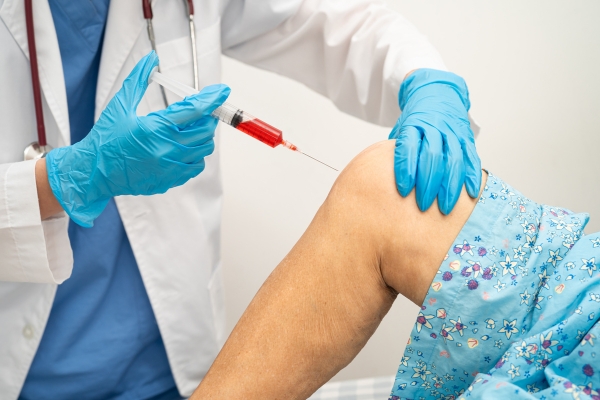
Why Knee Injections Stop Working Over Time
If you’ve had knee pain for months—or years—there’s a good chance someone recommended injections.
Maybe you were told:
“Let’s try cortisone first.”
“Gel shots may help lubricate the joint.”
“This should calm the inflammation.”
“If it comes back, we can repeat it.”
And for some people, injections do help temporarily.
But many adults eventually notice a frustrating pattern:
The first injection gave real relief.
The second helped less.
The third barely changed anything.
So what happened?
In many cases, injections are addressing symptoms temporarily while the deeper causes of knee pain continue progressing underneath.
That’s why so many people end up feeling stuck between repeat shots and the fear of surgery.
At Knee Studio, we believe patients deserve to understand why relief fades—and what other options may still exist before knee replacement becomes the default path.
If your knee injections are helping less each time, schedule a Free Knee Relief Discovery Call here.
What Knee Injections Are Supposed to Do
Different injections are designed for different goals.
Cortisone Injections
Cortisone is commonly used to reduce inflammation and temporarily calm pain in the knee joint.
For some patients, it can help during flare-ups or periods of severe swelling.
Hyaluronic Acid / Gel Injections
These are often marketed to improve lubrication inside the joint and reduce friction, especially in arthritic knees.
Other Injection-Based Options
Some patients explore specialty or regenerative-style injections depending on provider, diagnosis, and candidacy.
But regardless of type, one truth often remains:
Most injections are designed to help symptoms—not fully reverse the reasons the knee became painful in the first place.
For a broader overview of non-surgical options, read our pillar guide:
Knee Pain Relief in The Woodlands: Non-Surgical Options Before Knee Replacement
Why Knee Injections Often Stop Working
1. The Joint Environment Keeps Worsening
If your knee has ongoing arthritis, instability, overload, or degeneration, the condition may continue progressing even while symptoms are temporarily reduced.
That means pain relief may wear off faster each time because the underlying stress inside the joint never improved.
This is especially common in people told they are “bone on bone.”
Related Reading:
2. Muscle Weakness Is Still There
Many painful knees are not only dealing with cartilage wear—they’re dealing with weak support systems.
That includes weakness in the:
Quadriceps
Glutes
Hamstrings
Hips
Core stabilizers
When these muscles aren’t doing their job, the knee absorbs more force than it should.
An injection may reduce pain—but it does not rebuild the support around the joint.
Related Reading:
3. Movement Patterns Never Changed
How you move every day matters more than most people realize.
Things like:
Walking mechanics
Stair climbing form
Sitting and standing patterns
Weight shifting
Squatting technique
…can repeatedly irritate the same painful knee.
If poor mechanics continue, symptoms often return after the injection effect fades.
Related Reading:
4. Inflammation Returns Because Triggers Remain
Inflammation doesn’t appear randomly.
It can be driven by:
Excess joint stress
Poor recovery habits
Sedentary behavior
Weight gain
Metabolic issues
Chronic irritation
Limited movement
So while an injection may reduce inflammation short-term, the triggers that created it may still be active.
Related Reading:
Why Temporary Relief Can Become a Long-Term Trap
Many people unknowingly enter this cycle:
Pain returns → get another injection → feel better briefly → pain returns again
Months pass. Sometimes years.
Meanwhile:
Walking gets harder
Stairs become more difficult
Activity levels drop
Strength declines
Weight may increase
Confidence decreases
Then one day, surgery feels like the only remaining option.
This is why many patients say:
“I wish I had addressed it sooner.”
Are Knee Injections Always Bad?
No.
Injections can absolutely have a place in a smart care plan.
They may help:
Calm an acute flare-up
Reduce swelling enough to move better
Help before a trip or major event
Create a window to begin rehab
Improve short-term comfort
The issue is not that injections exist.
The issue is when injections become the entire strategy.
If nothing else is being addressed, long-term outcomes are often disappointing.
What Usually Works Better Than Symptom Chasing
Instead of only asking:
“How do I numb the pain again?”
Ask:
“How do I improve the knee environment?”
That shift matters.
Many adults respond best when a plan includes multiple components.
1. Strength Building
The stronger the support system, the less force the knee may absorb.
2. Stability Training
Improved control often reduces irritation.
3. Better Movement Mechanics
Walking and stair strategies can matter more than people think.
4. Circulation Support
Healthier blood flow can support tissue recovery and reduce stiffness.
5. Load Management
Knowing when to push and when to recover matters.
Related Reading:
Signs It May Be Time to Reevaluate the Injection Path
If any of these sound familiar, it may be time for a deeper conversation:
Relief lasts less time than before
Pain returns quickly after shots
You’re avoiding activity more often
Walking distance is shrinking
Stairs are becoming harder
The knee feels unstable
You’re relying on repeat injections
No one has addressed strength or mechanics
These are common signs that symptom management alone is no longer enough.
If repeat injections are no longer giving lasting relief, book your Free Knee Relief Discovery Call here.
Does This Mean Surgery Is Next?
Not necessarily.
Some people truly do need surgical consultation.
But others still have room to improve function, mobility, and pain naturally before replacement becomes the best next step.
The key is understanding:
How advanced the condition really is
What function remains
What has been ignored so far
Whether non-surgical options still make sense
Related Reading:
What We Believe at Knee Studio
Your knee is more than an X-ray.
It is part of a movement system.
That means better outcomes often come from improving:
Strength
Stability
Mobility
Confidence
Daily movement tolerance
Not just masking pain for another few months.
Final Thoughts
Knee injections can help temporarily.
But when they stop working over time, it is often a sign that deeper drivers of pain were never fully addressed.
That doesn’t mean you’re out of options.
It may simply mean it’s time for a smarter plan.
Before assuming surgery is next, find out what may still be possible.
Final CTA
Take the first step today. Schedule your Free Knee Relief Discovery Call now.


